Review of Faith Hope Love Daisy for Real Embroidery Projects
As an experienced embroidery designer and product reviewer, I always look for designs that balance aesthetics with practicality. Faith Hope Love Daisy caught my eye not just for its name, but for the visual promise it holds. Let’s dive into how this machine embroidery design stacks up in real-world use — from tote bags to boutique branding.
A First Glance at the Design
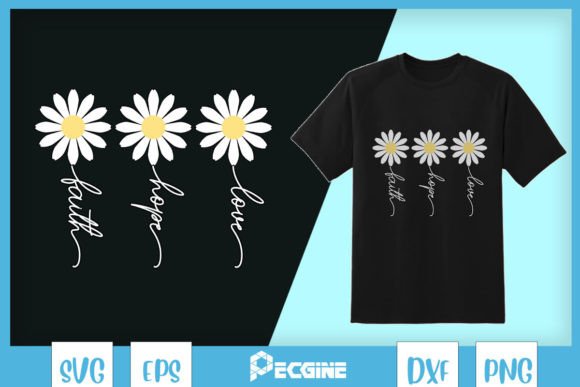
The Faith Hope Love Daisy has a soft, floral charm with a clean layout. The daisy motif is classic yet modern, making it versatile for a range of crafts and graphics. Its shape is symmetrical and well-proportioned, which immediately suggests good stitch-out potential on flat surfaces like fabric squares or apparel. The detail level is moderate — enough to add character without overwhelming the design space. It feels handcrafted in spirit but designed with digital precision in mind.
I appreciate how the text “Faith Hope Love” is integrated into the daisies themselves, creating a cohesive message. This makes it ideal for personalized gifts, holiday items, or branded products where sentiment plays a key role. The mood is warm and inviting, perfect for baby clothes, home décor, or spiritual-themed merchandise.
Visual Personality and Project Fit
This design naturally belongs in handmade products and personalized gifts. It works best when you want to evoke feelings of comfort, love, and hope. For instance, if I were preparing a custom embroidered sweatshirt for a nursery, this would be a strong contender. It also fits well as an embroidered patch for denim jackets or backpacks. The layout allows it to stand alone or be part of a larger composition, depending on your creative needs.
Real-World Performance: Stitching and Presentation
When testing Faith Hope Love Daisy, I found that the stitch paths are smooth and well-organized. The blend of satin stitch and fill stitch gives it a polished look, especially on medium-weight cotton blends. On a tote bag, it looked professional and added a subtle pop of personality. On a baby onesie, it was sweet and appropriate — no over-the-top flair, just a gentle message wrapped in a pretty design.
For sweatshirt embroidery, the design maintained clarity even after several washes, provided the stabilizer was properly used. The lettering, while not tiny, was readable and had enough spacing between characters to avoid distortion. That said, if you’re working with stretchy fabrics like spandex or thin knits, you’ll need to adjust tension and stabilize carefully — otherwise, the stitching could pucker or lose definition.
In a recent project involving tea towels and pillow covers, the daisy motif worked beautifully as a central graphic. It didn’t feel too busy, and the white space allowed room for other embellishments or brand logos. As a digital embroidery file, it loaded smoothly into both Wilcom and Hatch software, maintaining its shape and integrity across different platforms.
Design Use Cases and Limitations
- Custom Apparel: Great for t-shirts, hoodies, and sweatshirts — especially when paired with minimal text or monogramming.
- Baby Items: Soft and timeless, it suits onesies, bibs, and burp cloths without being too childish.
- Tote Bags: Stands out well on cotton canvas and looks neat even when stitched in a corner.
- Holiday Gifts: The theme is adaptable for Christmas, Easter, or Mother’s Day, depending on color choices.
- Commercial Embroidery: Offers enough flexibility to work in small shop products and Etsy listings with a consistent aesthetic.
However, there are some scenarios where this design should be approached with caution. When using it on curved surfaces like caps or hats, the alignment can become tricky unless you have a hooping system that accommodates 3D shapes. Also, if you're planning to embroider on dark fabric, thread color contrast is crucial — the default colors may not show up as clearly as expected.
Where to Use It Carefully
While Faith Hope Love Daisy is versatile, it's not one-size-fits-all. Here are a few places where it might need extra attention:
- Small Hoop Sizes: The design has enough elements that scaling down could compromise readability and stitch quality.
- Textured Fabrics: If you're stitching on flannel or felt, consider adjusting stitch density or using a finer needle.
- Dense Stitch Areas: Some parts of the design feature tight clusters of stitches. These can cause puckering or distortion if not stabilized correctly.
- Products That Need Frequent Washing: Especially in craft business environments, frequent laundering can affect thread durability. Always test for longevity before mass production.
Stitch Clarity and Thread Choices
Thread color selection is key here. The default palette includes pastel tones that work well on light backgrounds, but if you're selling custom apparel or holiday gifts, consider offering a few curated thread options for better visibility. I recommend testing it in black and white mockups to ensure it still reads clearly in grayscale — this helps identify any areas where contrast is lacking.
Also, pay attention to stitch direction and flow. The running stitch elements help define the daisies without adding unnecessary bulk. That’s a big plus for layered garments or lightweight materials where stitch weight matters.
Design Impact on Branding and Customer Engagement
What makes Faith Hope Love Daisy shine is its emotional appeal. In handmade shops and Etsy stores, such motifs can increase product value and customer trust. People gravitate toward designs that tell a story or carry meaning — and this one does exactly that.
From a craft business standpoint, it adds a touch of professionalism without feeling overly commercial. It can serve as a signature element in boutique branding or be repurposed as a decorative accent on aprons and kitchen towels. The transparent PNG included is particularly handy for printable mockups, helping sellers visualize how it will appear on finished products before they start stitching.
On commercial embroidery projects, the design brings a sense of warmth and authenticity. Whether it's a gift for a friend or a batch of totes for resale, the visual appeal remains high. But remember: if you plan to sell the final product or offer digital embroidery files for resale, always check licensing terms first. You don't want to run into legal issues later.
Handmade Presentation and Giftability
One of the most satisfying aspects of this design is how it elevates the presentation of a handmade product. It doesn’t shout; it whispers. This subtlety is perfect for those who appreciate understated elegance. When stitched neatly on a linen pillow cover or a cotton romper, it instantly becomes a personalized gift with lasting appeal.
Its simplicity also makes it easy to adapt for different audiences. A bright version could work for a children’s item, while a muted tone might suit a wedding gift or spiritual keepsake. The versatility is what sets it apart from generic embroidery graphics.
Designer Notes and Best Practices
Before committing to a full production run or client project, I always suggest these steps:
- Test on scrap fabric first: Especially if you're using a new stabilizer or unfamiliar thread combination.
- Check thread color contrast: Make sure the design stands out on your intended background fabric.
- Review stitch density: Look for areas that may require adjustment to prevent puckering or excessive stiffness.
- Confirm hoop size: If you're unsure about dimensions, scale it down slightly and see how it handles.
- Inspect small details: Ensure all petals and letters are intact and not distorted during resizing.
- Use proper stabilizer: Tulle or cut-away can make a huge difference in how the design lies flat post-stitching.
- Compare light and dark fabric backgrounds: Sometimes the same design can read completely differently based on fabric choice.
- Consider brand consistency: Does this fit your overall style? Will customers recognize it as part of your line?
- Confirm whether it works for both personal and commercial projects: Licensing is essential for resale or digital distribution.
Final Thoughts for Crafters and Entrepreneurs
Faith Hope Love Daisy isn’t just another embroidery file — it’s a thoughtfully composed machine embroidery design that balances sentiment and structure. Whether you're a hobbyist making a heartfelt gift or a small shop owner looking to expand your product line, this design has the potential to bring your vision to life with grace and clarity.
Its strength lies in its ability to fit multiple contexts while retaining a unique identity. From tote bag design to nursery decor, it adapts well — but only if you take the time to understand its nuances. With the right preparation and care, it can become a staple in your design assets and a favorite among your customers.
So go ahead — give Faith Hope Love Daisy a try. Just remember to test, tweak, and think through the final application. Your finished product will thank you for it.